
 EN
EN
 English
 Client
What Is Slippage in Forex Trading?
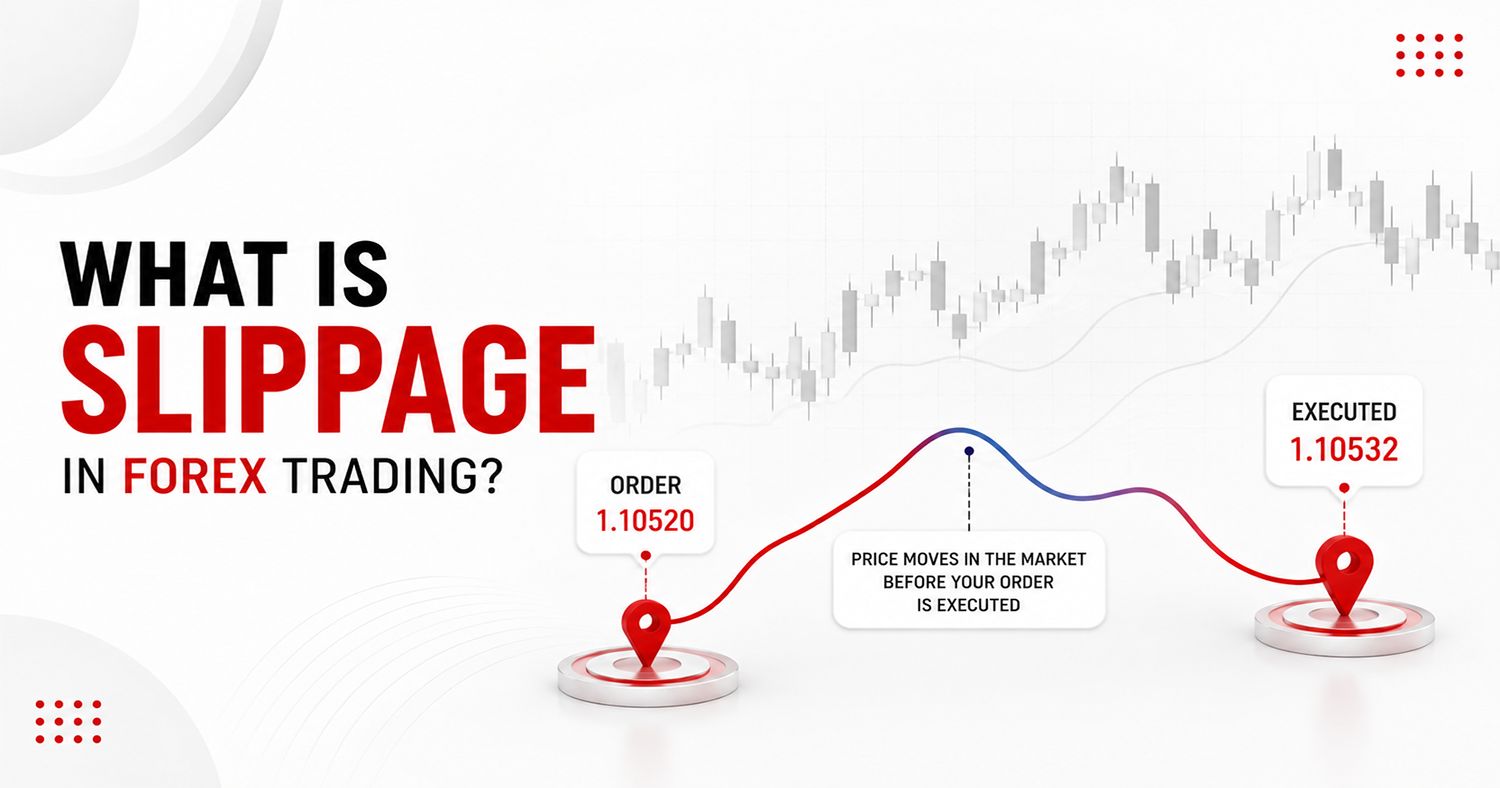
Financial markets move continuously, often within milliseconds. In highly active trading environments, prices can change before an order is fully processed. When this happens, traders may notice that their position is executed at a slightly different price than expected. This phenomenon is known as slippage.
Slippage is a normal part of trading and can occur across various financial instruments, including forex, gold, commodities, indices, and cryptocurrencies. Understanding how slippage works is essential for traders who want to manage risk professionally and develop realistic expectations about market execution.
At Zed Capital, we believe that a strong trading foundation begins with understanding how real market conditions operate.
Understanding Slippage in Simple Terms
Slippage refers to the difference between:
the price a trader expects to receive, and the actual price at which the trade is executed.
For example, a trader may place a Buy order on EUR/USD at 1.1200. However, due to rapid market movement, the order may ultimately be executed at 1.1203. The three-pip difference represents slippage.
This can happen in both normal and volatile market conditions, although it becomes more noticeable during periods of strong price movement.
Types of Slippage
Positive Slippage
Positive slippage occurs when a trade is executed at a more favorable price than requested.
Example:
Requested Buy Price: 1.1200
Executed Buy Price: 1.1197
In this scenario, the trader receives a slightly better market entry.
Negative Slippage
Negative slippage occurs when a trade is executed at a less favorable price than expected.
Example:
Requested Buy Price: 1.1200
Executed Buy Price: 1.1205
This may slightly increase trading costs or impact overall profitability.
Both forms of slippage are a natural result of how live financial markets function.
Why Does Slippage Occur?
Slippage is primarily driven by rapid changes in market pricing and liquidity conditions. Several factors commonly contribute to it.
Market Volatility
High-impact economic events can create sharp price fluctuations within seconds. During these periods, markets may move faster than orders can be matched at the requested price.
Common volatility-driven events include:
- U.S. inflation data (CPI)
- Non-Farm Payrolls (NFP)
- Federal Reserve interest rate decisions
- GDP releases
- Central bank speeches
Lower Market Liquidity
Liquidity refers to the availability of buyers and sellers in the market. During low-liquidity periods, fewer available price levels may exist for immediate execution.
This can occur:
- during market open or close,
- around holidays,
- in overnight sessions,
- or while trading less-active instruments.
Lower liquidity can increase the probability of slippage.
Fast-Moving Markets
Instruments such as:
- Gold (XAU/USD)
- Bitcoin (BTC/USD)
- NASDAQ (NAS100)
can experience rapid price movement within short periods, especially during news events or institutional activity.
As prices move quickly, execution differences may naturally occur.
Large Order Sizes
Large market orders may require multiple liquidity levels to complete execution. In fast-moving conditions, this can result in partial fills at different prices.
Institutional traders and high-volume participants often pay close attention to market depth and liquidity for this reason.
Slippage During Economic News Events
Slippage is particularly common during major economic announcements.
When important data is released, trading activity can increase sharply as participants react simultaneously. During these moments:
- spreads may widen,
- volatility may increase,
- prices can move extremely quickly.
This is why professional traders often approach high-impact news events with additional caution.
Reference for Economic Calendar here
Difference Between Spread and Slippage
Although often confused, spreads and slippage are two separate concepts.
Spread
The spread is the difference between the Bid and Ask price quoted by the market.
Slippage
Slippage is the difference between the expected execution price and the final executed price.
Both influence trading costs, but they originate from different market mechanisms.
How Traders Can Reduce Slippage
While slippage cannot be completely eliminated, traders can take several practical steps to reduce its impact.
Trade During High-Liquidity Sessions
The London and New York sessions generally offer stronger liquidity and smoother market execution compared to quieter trading hours.
Be Cautious During Major News Releases
Some traders prefer to avoid entering positions immediately before significant economic announcements due to increased volatility.
Use Proper Risk Management
Professional trading is built around disciplined risk control, including:
- appropriate position sizing,
- stop-loss management,
- controlled leverage,
- realistic trade planning.
Focus on Execution Quality
Trading infrastructure, execution technology, and market access can influence order processing efficiency during fast-moving conditions.
Learn more about trading technology:
MetaTrader 5 (MT5) Trading Platform
Is Slippage Always Negative?
Not necessarily.
Many traders associate slippage only with losses, but positive slippage can also occur when markets move favorably during execution.
In reality, slippage reflects the natural dynamics of live financial markets. The key for traders is not to avoid all slippage entirely, but to understand how market conditions influence execution quality.
Experienced traders focus on preparation, discipline, and risk management rather than expecting perfectly fixed pricing in every situation.
Final Thoughts
Slippage is an important concept that every forex trader should understand before participating in live markets. As prices move continuously in response to liquidity, volatility, and market activity, execution differences can naturally occur.
By understanding how slippage works, traders can better manage expectations, improve risk control, and approach trading with a more professional mindset.
At Zed Capital, we are committed to helping traders build market knowledge through professional education, transparent insights, and accessible trading resources.
Internal Related Links
- Forex Trading Services
- Gold & Metals Trading
- MetaTrader 5 Platform
- Open a Trading Account
- About Zed Capital
External Authority Sources
⚠️ Educational purpose only.