
 EN
EN
 English
 Client
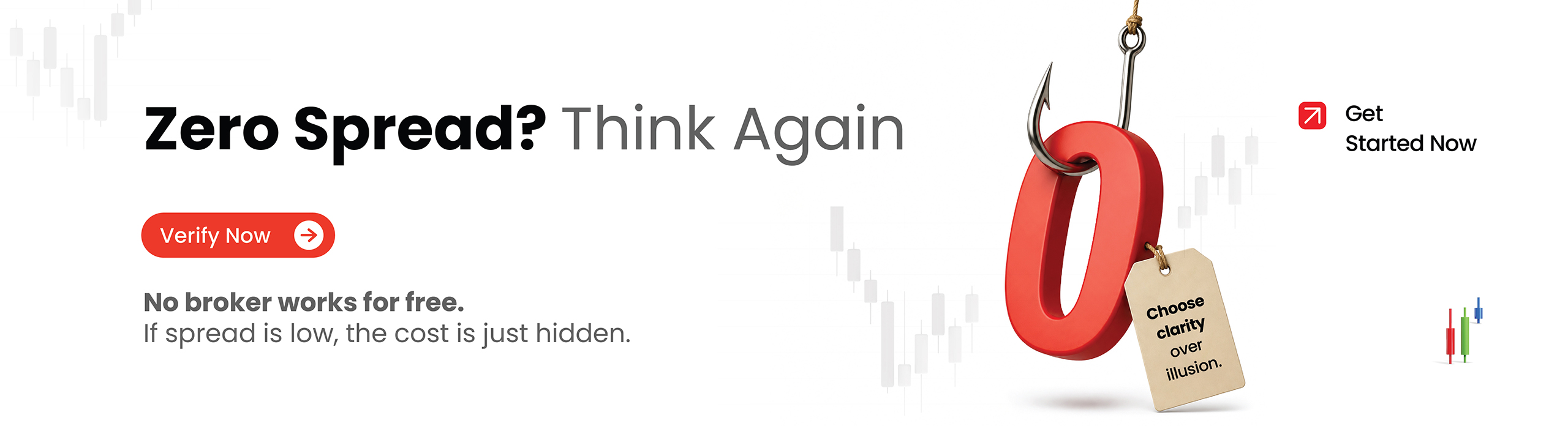
Zero Spread Forex Trading Explained: Costs, Reality & Smart Trading Decisions
Introduction: The Rise of Zero Spread Accounts
In the evolving landscape of forex trading and CFD markets, “zero spread” has become one of the most searched and promoted terms. Many traders are drawn to zero spread forex accounts under the assumption that they offer the lowest possible trading cost.
However, in professional trading environments, cost structures are never eliminated—they are reallocated.
Understanding the mechanics behind zero spread trading is essential for making informed decisions and avoiding hidden inefficiencies.
What is Zero Spread in Forex Trading?
In standard forex trading, the spread refers to the difference between the bid price and ask price, which acts as a transaction cost.
A zero spread account removes this visible difference, creating the perception of cost-free execution. However, brokers offset this by introducing other forms of revenue generation.
👉 Learn more about pricing models on our Account Type
Where Do the Costs Go? Understanding the Real Pricing Model
1. Commission-Based Trading
Most zero spread accounts charge a fixed commission per lot, which replaces the traditional spread.
2. Execution Pricing & Slippage
In volatile conditions, execution price differences (slippage) can increase effective trading costs.
3. Swap and Overnight Fees
For positions held overnight, swap rates may be higher compared to standard accounts.
4. Liquidity & Market Conditions
Pricing may vary depending on liquidity providers, especially during major economic events.
Total Trading Cost: The Metric That Actually Matters
Professional traders evaluate brokers based on Total Cost of Trading (TCT) rather than spread alone.
TCT includes:
Spread (if applicable)
Commission fees
Slippage and execution quality
Swap/rollover charges
Zero Spread vs Low Spread: Which is Better?
Choosing between zero spread forex accounts and low spread accounts depends on trading objectives:
Scalpers: Prefer zero spread with low commission
Intraday traders: Benefit from stable low spreads
Swing traders: Focus on lower swap costs
Long-term traders: Require predictable pricing
The goal is not zero cost—but optimized cost efficiency.
Why Transparency is Critical in Forex Trading
A reliable broker provides:
Clear pricing structures
Consistent execution
Access to deep liquidity
No hidden charges
Transparency allows traders to maintain accuracy in risk management and performance evaluation.
Zed Capital: Built on Transparency and Performance
At Zed Capital, we focus on delivering a professional trading environment designed for both retail and institutional traders.
Our key advantages:
Transparent and competitive pricing
Institutional-grade execution systems
Multi-asset access: Forex, commodities, indices, crypto
Stable trading conditions across all market phases
👉 Start your journey with
Open Trading Account
Conclusion: Look Beyond “Zero”
“Zero spread” is not misleading—but it is often misinterpreted.
In financial markets:
Hidden costs can impact performance more than visible ones.
Smart traders focus on complete cost transparency, not just headline features.
Start Trading with Clarity
Zed Capital — Global Market Capital Solution
🌐 Visit: https://zedcapital.com